
Eliminate Cold Draughts

Underfloor Insulation Installers

Underfloor insulation targets the hidden heat loss that makes ground-floor rooms cold and costly to heat.
Eliminate Cold Draughts & Rising Heating Bills

Up to 15% of household heat is lost through uninsulated floors, leaving ground-level rooms colder and increasing heating costs year after year. Gaps between floorboards or uninsulated concrete slabs allow cold air to rise, creating draughts and uneven temperatures across the home.

Elite Energy’s underfloor insulation installers provide services across the North of England, helping households stop heat loss at its source. We offer tailored underfloor insulation solutions through government-backed grants for eligible homes, as well as straightforward paid options with finance for those who prefer to invest directly.

Every project is completed by our accredited in-house team using eco-friendly insulation materials that deliver decades of reliable thermal performance. The result is a warmer home, lower bills, and floors free from draughts.

What Is Underfloor Insulation & Why It’s Needed

Many UK homes, especially those built before the 1970s, have floors that lose significant heat. Suspended timber floors allow cold air to move through gaps, while solid concrete floors can transfer ground chill directly into living spaces. Both create cold rooms, draughts, and higher heating demand.

Professional underfloor insulation services address these problems by adding a thermal barrier beneath your ground floors. For timber floors, insulation materials such as mineral wool are fitted securely between joists to block cold air and stabilise humidity around timber, protecting joists from damp-related damage. For concrete floors, rigid boards are added above or below the slab to prevent ground chill from rising into rooms.

The result is a ground floor that feels warmer underfoot, fewer draughts moving through the property, and reduced pressure on your heating system. Over time, floor insulation helps protect timber structures, lowers the risk of damp and mould at skirting level, and makes ground-floor living spaces noticeably more stable and comfortable.

Underfloor Insulation Costs & Long-Term Savings

For households choosing a private installation, underfloor insulation installers at Elite Energy provide clear, fixed pricing. Costs start from £100 per m², with the final figure confirmed after a full property survey to account for floor type, access, and size.

Average Cost & Savings:

  • Detached: From £2,500 with typical annual savings of £120–£150.

  • Semi-Detached: From £2,000 with typical annual savings of £100–£120.

Although financial savings are smaller than loft or wall insulation, underfloor insulation removes cold patches, blocks draughts at floor level, and helps protect timber floors from moisture-related damage.

Insulation materials typically last for decades, meaning households continue to benefit year after year through reduced energy waste and more stable indoor conditions. Finance options are available to spread the cost into manageable monthly payments.

UK Grants for Underfloor Insulation

Households across the UK can often secure underfloor insulation grants through national funding programmes. These schemes are designed to reduce heating costs, improve thermal efficiency, and make homes warmer for the long term.

In many cases, underfloor insulation is approved as part of a wider package of home insulation services, which may include loft insulation or cavity wall insulation under the same grant application.

For qualifying households, this means upgrades are completed at little or no expense, with paperwork and approvals managed entirely by Elite Energy.

ECO4 Scheme

Focused on low-income and vulnerable households, ECO4 usually covers the full cost of underfloor insulation. This includes surveys, materials, and installation carried out by accredited contractors.

Great British Insulation Scheme

Offering broader eligibility, GBIS funding is linked to property EPC ratings and council tax bands. In most cases, underfloor insulation is fully funded, though some households may be asked to contribute a small share of the cost.

Underfloor Insulation for a Warmer, Healthier Home

Uninsulated floors are a constant source of heat loss, cold draughts, and even moisture problems. Professional underfloor insulation services resolve these issues directly, improving thermal insulation, stabilising conditions, and protecting the home for decades.

Cold draughts through floorboards
Gaps in suspended timber floors allow cold air to rise from below, leaving rooms chilly even when the heating is on.

Cold feet and downstairs discomfort
Floors stay uncomfortably cold in winter, especially in living rooms and kitchens, making ground floors hard to heat.

Moisture damage to timber
Poorly insulated floors combined with poor ventilation create damp conditions that weaken joists and shorten floor lifespan.

Uneven room temperatures
Without floor insulation, downstairs spaces often feel colder than upstairs, forcing heating systems to run longer.

Noise transfer between floors
Adding insulation softens sound from basements, crawlspaces, or between floors, creating quieter living areas.

Lower property performance
A lack of floor insulation contributes to poor EPC ratings, reducing long-term property value and limiting landlord compliance.

Insulation Options for Your Floor Structure

Every property has its own floor structure, so our underfloor insulation installers adapt methods to suit. By tailoring the approach to suspended timber floors, solid concrete floors, or mixed layouts, we ensure long-term performance and safe installation in every home.

Suspended Timber Floors

Suspended Timber Floors

  • Common in pre-1970s homes, where air flows up through gaps in the boards.

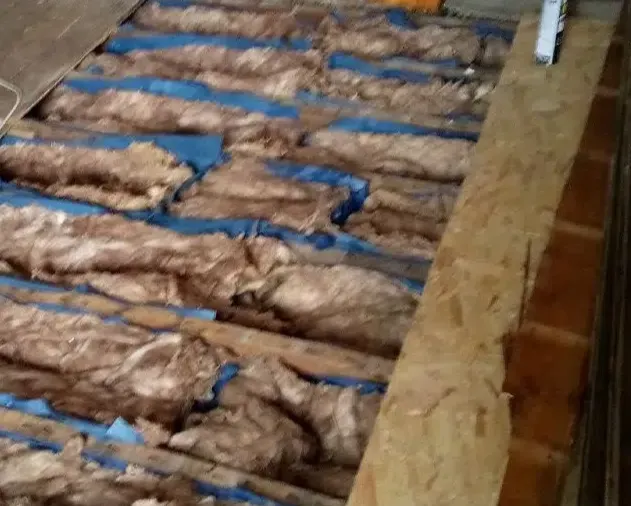
  • Our team lifts boards or works through crawl spaces, securing mineral wool between joists with breathable netting.

  • This blocks draughts, keeps floors warmer, and helps protect timber from moisture and decay.

Solid Concrete Floors

Solid Concrete Floors

  • Found in newer homes, where heat can be lost through the slab into the ground.

  • Insulation is added as rigid boards either above the slab (with a new floor finish) or below during major refurbishment.

  • This prevents ground chill entering rooms, creating more stable thermal insulation across the home.

Mixed Floor Types

Mixed Floor Types

  • Many properties feature a combination of suspended and solid floors.

  • Elite Energy delivers tailored underfloor insulation services, selecting the right method for each area to deliver consistent energy efficiency throughout the property.

Our Step-By-Step Installation Process

Our underfloor insulation installers follow a clear, professional process to ensure every project is safe, effective, and long-lasting. Most installations are completed in 2-3 days, depending on property size and floor type.

  • 1

    Survey & Floor Assessment

    A trained surveyor confirms whether your home has suspended timber floors, solid concrete floors, or a mix of both. We check ventilation, identify any signs of damp, and determine the insulation method required for each area.

  • 2

    Preparation & Safe Access

    Floorboards are lifted where required or access is created through existing crawl spaces. Protective coverings are laid, and all fixtures are handled with care before installation begins.

  • 3

    Insulation Installation

    Mineral wool netting is attached between timber joists for suspended floors, creating a stable thermal layer. For concrete floors, rigid insulation boards are fitted above or below the slab, depending on layout and refurbishment plans.

  • 4

    Reinstatement & Final Checks

    Boards are refitted securely and ventilation pathways remain unobstructed. A final inspection confirms full coverage and performance, followed by documentation and guarantees for long-term confidence.

What Sets Our Underfloor Insulation Services Apart

At Elite Energy, our underfloor insulation installers deliver every project in-house, ensuring quality, safety, and consistency from start to finish.

  • Nationwide coverage: Teams based across Scotland, Wales, the Midlands, the North East, and the North West, with the same standards wherever you live.

  • Certified quality: All work carried out under TrustMark and ISO standards, supported by ECO4 and GBIS accreditations, and backed by a 25-year guarantee.

  • In-house expertise: No subcontractors. Our own floor insulation specialists manage surveys, installation, and aftercare.

  • Tailored approach: From suspended timber to solid concrete floors, solutions are adapted to each property type for maximum thermal performance.

  • Whole-home insulation services: Many households combine underfloor upgrades with loft insulation or internal wall insulation as part of a complete energy efficiency package.

What to Expect After Approval

The installation journey differs slightly between grant-funded and private projects, but in every case, Elite Energy manages the entire process from survey to completion.

Throughout the process, our accredited team keeps disruption minimal, ensures ventilation pathways remain clear, and provides documentation and guarantees for long-term reassurance.

For grant-funded projects

Once eligibility for an underfloor insulation grant is confirmed, we handle all paperwork and approvals. Installations are usually scheduled within 4–6 weeks, depending on property access and floor type.

For paid projects

A home survey is carried out at a convenient time, followed by a fixed written quote. Finance options are available for those who prefer to spread the cost. Installation typically takes 2-3 days, with all flooring fully reinstated before the property is signed off.

Work with Trusted Underfloor Insulation Installers

Upgrading floors is one of the most effective ways to eliminate draughts, stabilise indoor temperatures, and protect timber from damp. With grants for underfloor insulation available through ECO4 and GBIS, many households pay nothing at all, while flexible finance makes private installs affordable.

Elite Energy’s accredited underfloor insulation installers operate nationwide, delivering reliable results backed by long-term guarantees and industry certifications.

Frequently Asked Questions

We have tried to answer most questions here but if you have any other queries please feel free to contact us!

How do I know if my floors are suitable for underfloor insulation?

Most homes built before the 1970s with suspended timber floors are suitable, as insulation can be installed between the joists. Concrete floors can also be insulated, though this is usually done during refurbishment or when flooring is replaced. A survey confirms floor type, ventilation, and suitability.

Will floor insulation affect ventilation in my home?

No. Professional installers maintain airflow under suspended timber floors to prevent moisture build-up. Ventilation pathways are always checked and preserved during installation to protect timber joists from dampness.

How long does insulation last once fitted?

When installed by accredited contractors, underfloor insulation materials can perform effectively for decades with little to no maintenance required. Guarantees and documentation confirm long-term performance.

Is the process disruptive for homeowners?

Disruption is minimal. For timber floors, work is usually carried out through crawlspaces or by lifting small sections of boards, all of which are replaced securely. Concrete floor insulation is typically added during larger refurbishment projects. Most homes are completed in 2-3 days.

What insulation materials are used under floors?

For timber floors, mineral wool supported by breathable netting is most common, chosen for its thermal performance and moisture resistance. For concrete floors, rigid insulation boards are installed to prevent heat loss and ground chill.

Can landlords apply for underfloor insulation grants?

Yes. Properties rented to tenants can qualify for ECO4 or GBIS grants, provided the building meets the relevant eligibility criteria. This helps landlords improve EPC ratings and meet rental efficiency requirements.

Will underfloor insulation help with damp or mould problems?

Yes. By adding a thermal barrier and stabilising humidity levels, underfloor insulation reduces the risk of condensation and damp patches forming at skirting level. Ventilation checks carried out during installation provide added protection.

Get A Quote